Slowdown Summit
About the project
Timeline:
Sept - Nov 2025
Skills:
UI/UX
Web Design
Tools:
Balsamiq
Figma
Webflow
Project Details
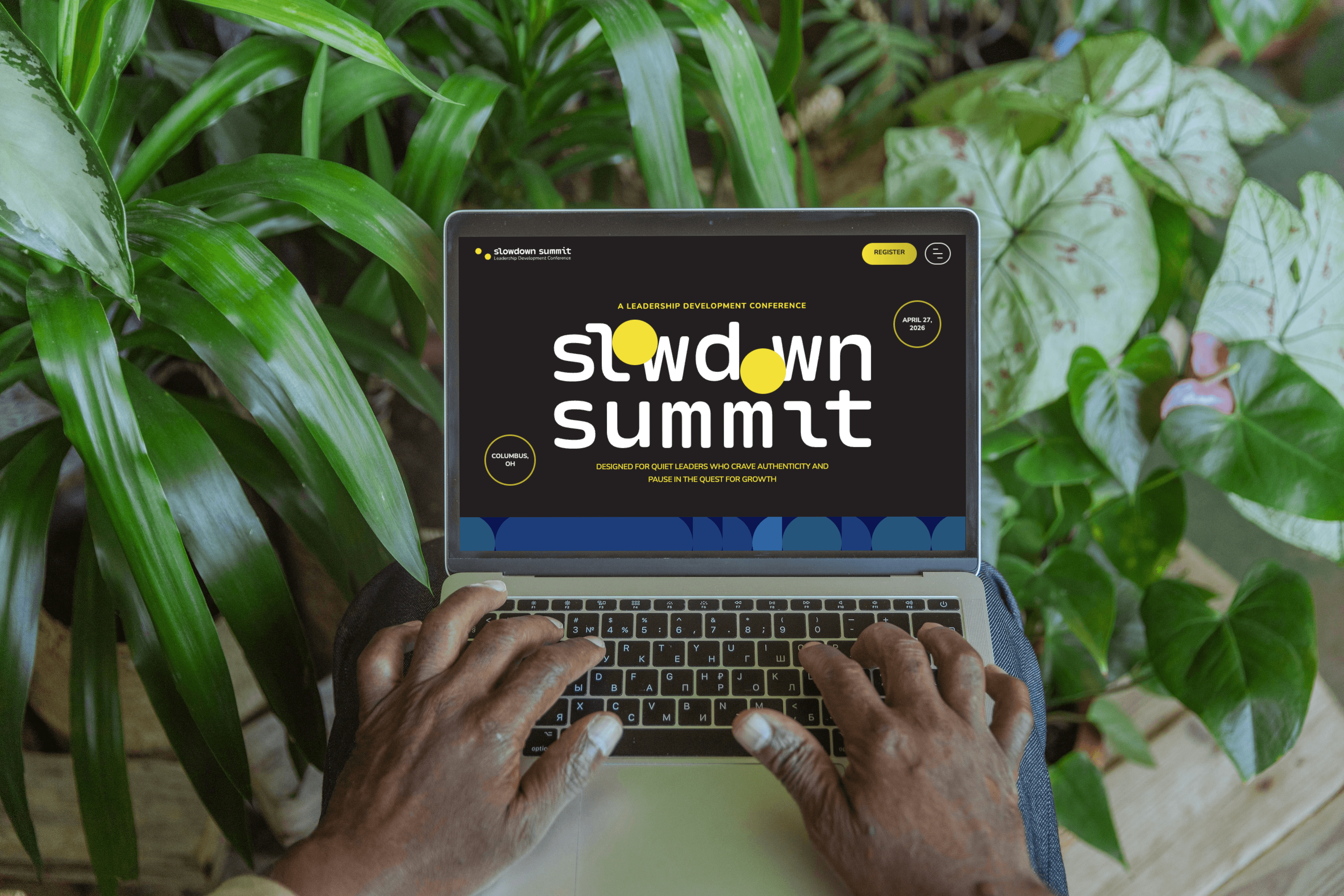
Slowdown Summit had a unique challenge: their conference was intentionally designed for introverts, neurodivergent leaders, and nontraditional thinkers, but most conference websites are overwhelming, unpredictable, and designed for neurotypical users. They needed a digital experience that actually reflected their mission of creating calm, thoughtful spaces.
I started by researching neurodivergent design principles, discovering that many common practices actually work against accessibility: unclear instructions, excessive animations, poor typography spacing, and unpredictable layouts all contribute to cognitive overload. But I also learned that some neurodivergent users benefit from interactive elements and subtle stimulation. The challenge was finding the right balance.
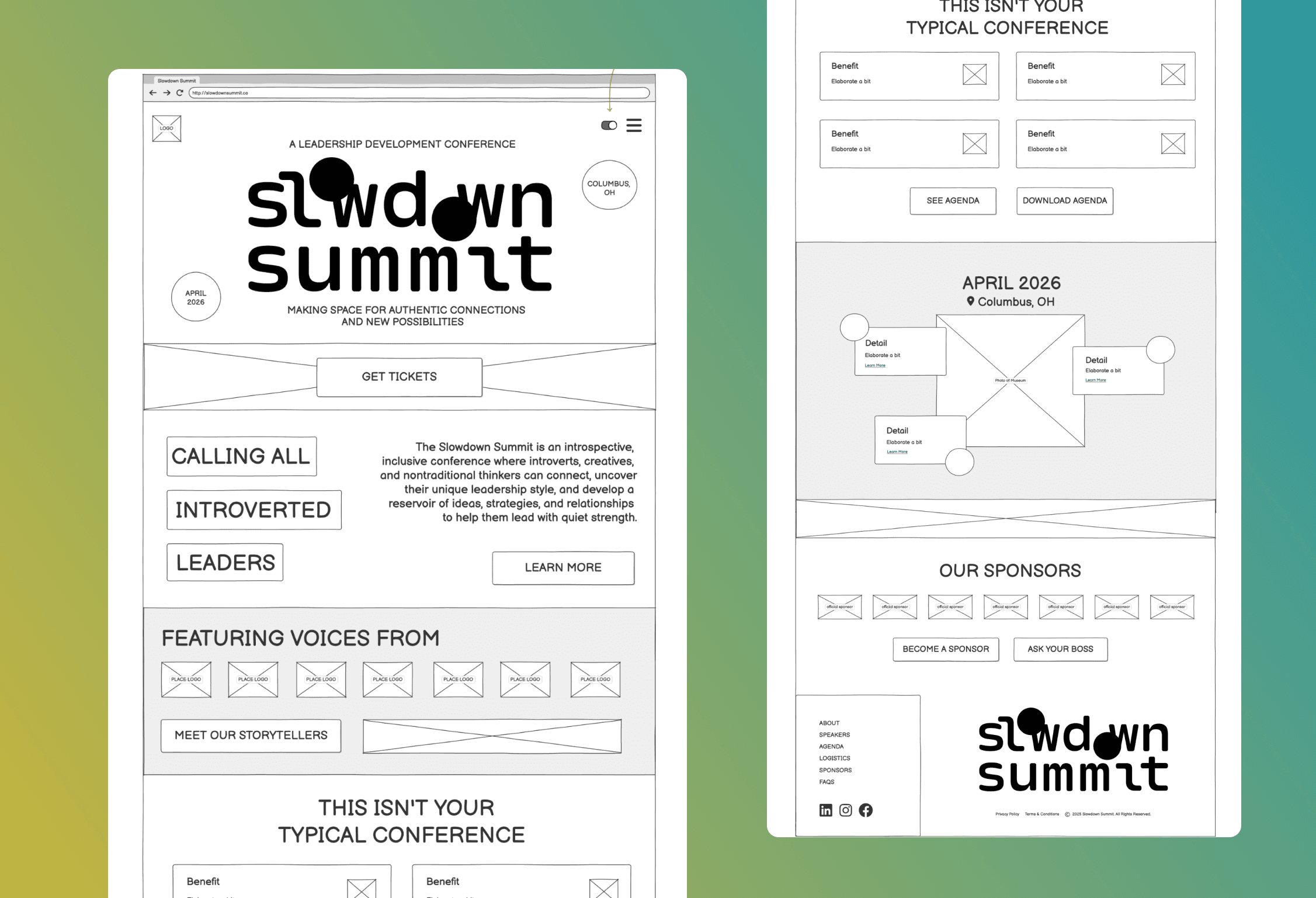
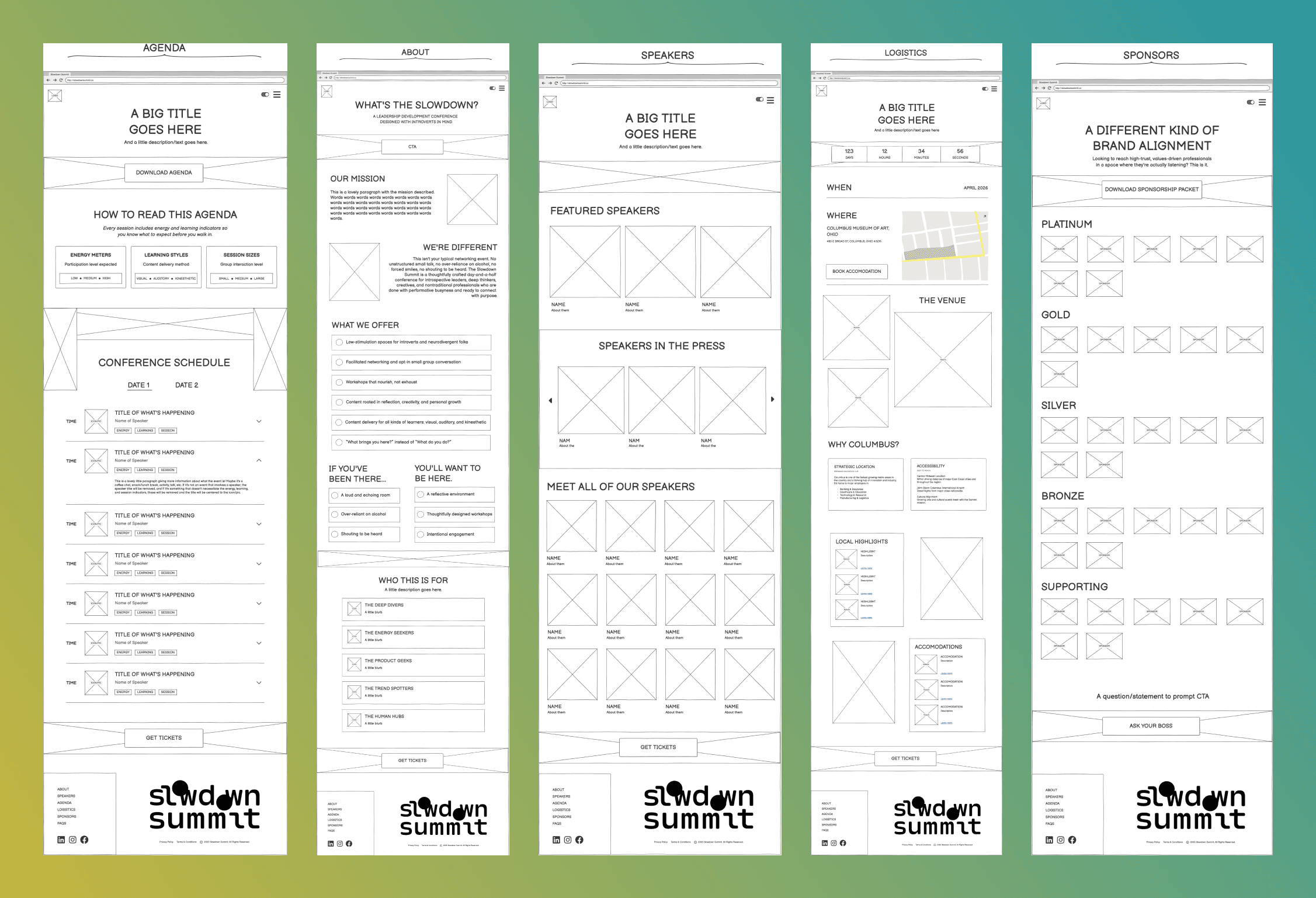
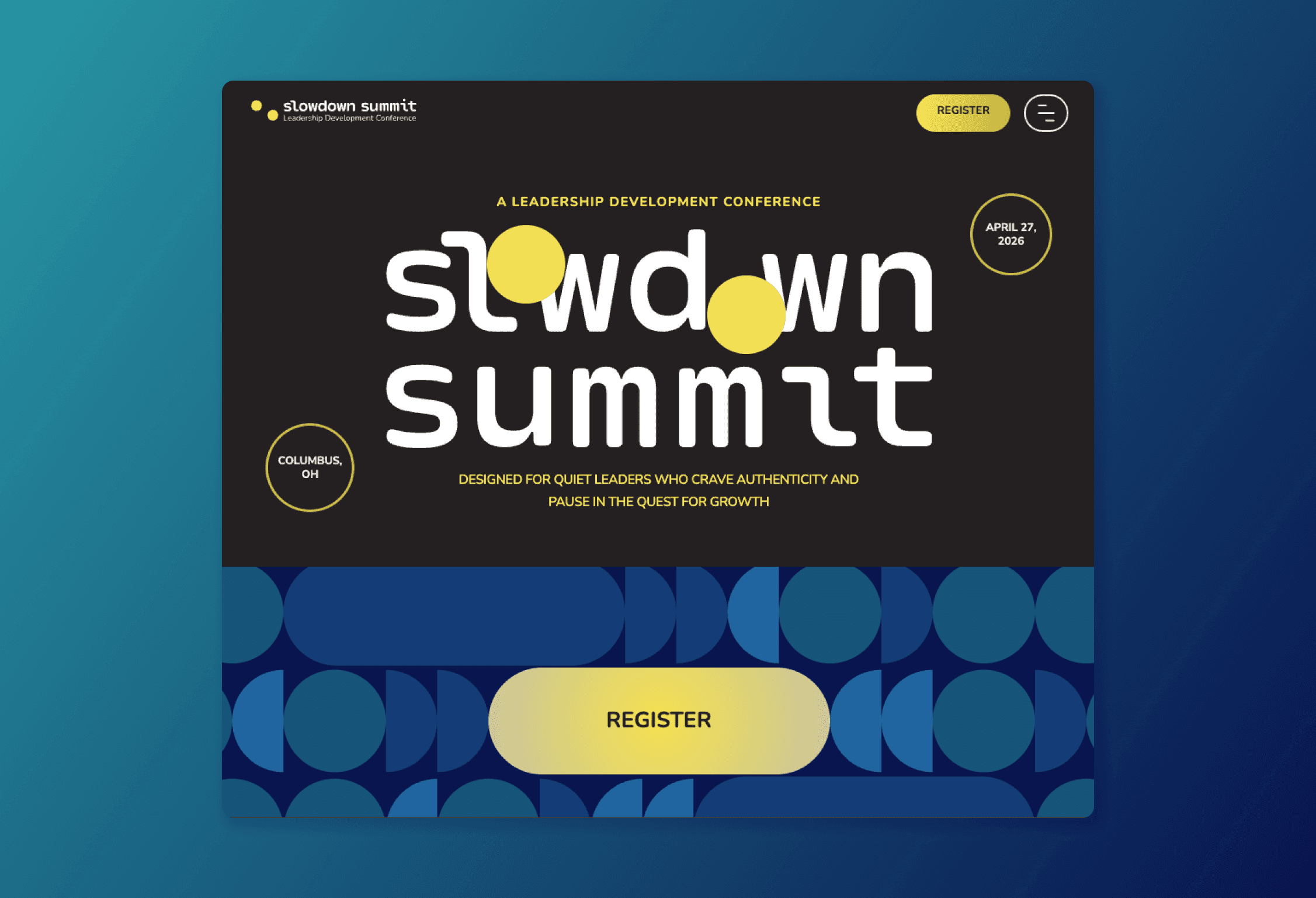
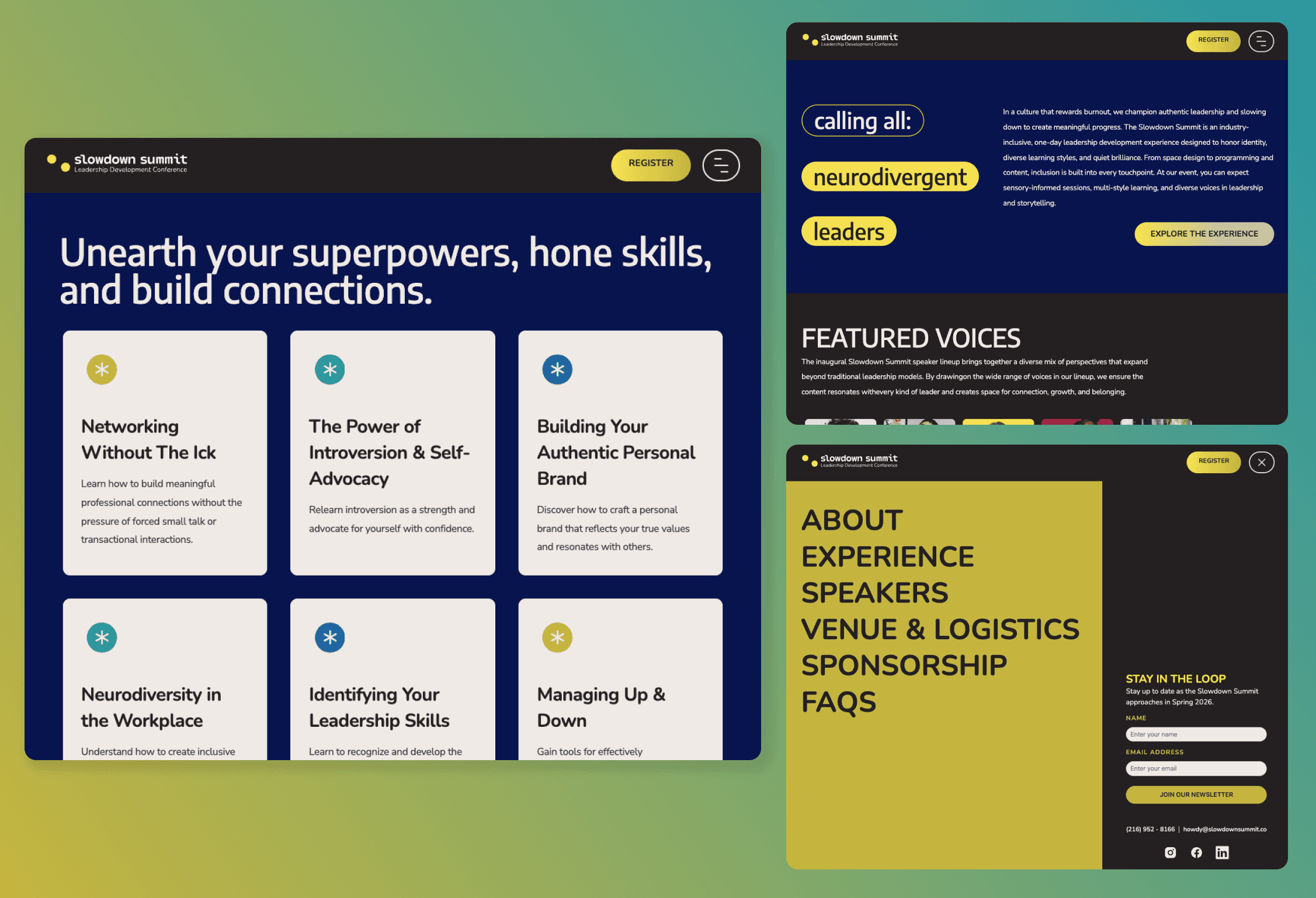
My design decisions centered on reducing mental load while maintaining engagement: I created clear visual hierarchy, established predictable hero sections that matched across pages, incorporated generous spacing, and carefully selected which interactive elements to include. The wireframes prioritized clarity and intentional interaction over flashiness, ensuring every element had a clear purpose. I delivered the design specifications and patterns and continue to provide feedback and guidance as the site is implemented.
* Due to ongoing event building, certain pages and information are omitted to maintain the surprise factor.
Liz played a key role in shaping the user experience for the Slowdown Summit website. She approached the project with intention, empathy, and a strong understanding of how attendees would actually move through the content. Her ability to simplify complex information into a clear, intuitive flow made the digital experience feel welcoming and accessible. She provides detailed annotations, received feedback gracefully, and contributed a can-do attitude to the team dynamic.
Brooke
Co-Founder; Brand Strategist & Designer
Things I Did
Research on neurodivergent-friendly design principles and accessibility best practices, wireframes for 8 pages including navigation and loading states, design specifications with clear hierarchy and predictable patterns, balanced approach to interactive elements that supported different neurodivergent needs, ongoing design consultation during implementation, and collaboration with founders to ensure designs aligned with the conference's mission.